What Actually Works—and What Always Breaks at the Worst Time
You’ve just landed in a new country. You’ve got a student SIM card, some borrowed Wi-Fi from your dorm, and a growing list of people back home who want to hear from you.
Calling family, checking in with a bank, or even calling your embassy sounds simple, until you try doing it on a tight budget, across time zones, and with tools that only work when the internet cooperates.
Most students start the same way: download the usual free apps, give them a try, and hope they work. Sometimes they do. But more often than not, those “free” apps break right when the call matters most.
Let’s talk about what you can really count on when it comes to free international calling, what works, what falls apart, and how to build a simple calling setup that won’t let you down.
What Most Free Calling Apps Actually Offer
The idea of free international calling sounds amazing—until you realize it usually comes with strings.
Apps like WhatsApp, Viber, Messenger, and Telegram let you make calls to friends and family across the world as long as the person you’re calling has the same app installed, is online, and has decent internet. That’s a lot of “ifs” for a call that might just be you saying hi to your mom.
They’re solid for:
-
Quick friend-to-friend chats
-
Group calls with your classmates
-
Casual check-ins when both sides are using smartphones and are connected to Wi-Fi
But let’s say you’re calling your aunt who still uses a landline. Or your father who never checks apps. Or a bank that only lists a direct dial number. Suddenly, these “free” apps can’t do much at all.
And even when they do work, the call quality can vary wildly. You might get clear audio one minute and complete silence the next. If either side moves to a weaker Wi-Fi zone, drops to mobile data, or has a low-end device, there goes your conversation.
In short, these apps do work, but they work best in perfect conditions. And let’s face it: those conditions don’t always line up when you’re a student juggling Wi-Fi issues, schedules, and family that’s not always tech-savvy.
Where Free Apps Break Down: Calls That Actually Matter
Here’s the catch that most students run into: the more important the call, the less likely your free app setup will work.
Trying to talk to someone who isn’t online? Forget it.
Calling a landline or customer service line? No chance.
Internet drops mid-call? You’re starting over.
This isn’t about app-bashing, it’s just reality. Free calling apps serve a purpose, but they’re not built for situations that require reliability, reach, or flexibility.
Think about the kinds of calls where stability actually matters:
-
Calling your university admissions office back home
-
Talking to your bank about a frozen account
-
Contacting the embassy during a document issue
-
Checking in with a family member who doesn’t use smartphones
These aren’t the kinds of calls where you want to hear, “Can you hear me now?” on repeat. You want the call to connect, be clear, and finish the job.
And relying solely on app-to-app solutions leaves too much to chance. They’re useful, but not the full answer.
Why Mytello Is the App That Doesn’t Break Under Pressure
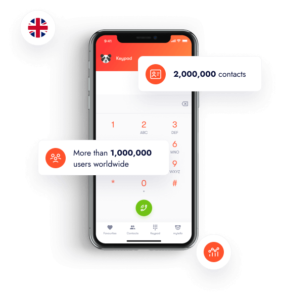
Now let’s shift to a tool that was built around what students actually need: clear, low-cost international calls that work even when free apps fail.
Mytello isn’t just another app in the mix. It’s designed for calling any phone number in over 220 countries, landlines, mobile phones, office phones, even support lines. And it doesn’t depend on whether the other person is online or what kind of device they’re using.
You sign up free, enter the number you want to call, and Mytello gives you a local access number, a regular number in your country (like the U.S. or Canada)—that routes the call internationally.
You can call from:
-
A smartphone
-
A keypad phone
-
A dorm landline
-
Or even from an old Nokia if it has a signal
No app needed to make the call. No internet required. And your number shows up as your own thanks to caller ID support.
This makes it ideal for students who don’t want to rely on perfect internet conditions just to call their parents, or who need to contact government offices, banks, or landlines back home that can’t be reached through free apps.
It also gives you freedom. Freedom to call from any phone, on any network, without switching SIMs, opening a dozen apps, or wondering if the line will drop halfway through the conversation.
And yes—your first call is free, so you can test it for yourself.
Want to see if Mytello supports your country? 👉 Check countries and coverage here
When “Almost Free” Is a Better Deal Than “Completely Free”
Let’s be honest: not every free thing is actually free.
-
Some apps limit call time unless you watch ads
-
Others give you minutes that expire quickly
-
Many ask you to buy credits just to unlock basic features
-
And most can’t connect you to actual phone numbers
Mytello charges just a few cents per minute, and that’s it.
No connection fees. No contracts. No bundles or hidden charges.
If you’re calling once a week to check in with your family, your credit might last a month. And if you’re calling an embassy, university, or public office, it’ll work the first time, no app matching, no Wi-Fi stress, no dead call.
You also avoid surprises. With Mytello, the rate is shown up front. You know what you’re paying. And since there are no long-term commitments, you’re not tied to anything. You can stop and start whenever you want.
This kind of flexibility makes more sense than constantly juggling apps that only work half the time—or spending $30 a month on international plans with your mobile carrier that you barely use.
Want to check how cheap your country’s call rates are? 👉 See full rate list here
Where to Start (No Setup Headaches, No Tech Stress)
Getting started doesn’t require tech skills. Mytello was built to be simple enough for anyone, whether you’re using the latest iPhone or a hand-me-down Android.
Here’s how it works:
-
Go to mytello.com and sign up (takes seconds)
-
Enter the number you want to call (anywhere in the world)
-
Mytello gives you a local number to save
-
Call that number directly anytime, just like dialing a friend in your own country
Once you’ve saved the number in your contacts, there’s nothing else to do. You don’t need to log in or open an app. Just open your dialer and call.
Prefer using an app? You can do that too. Mytello’s app for iPhone and Android gives you access to your balance, call history, and real-time credit usage, great if you like seeing everything in one place.
You’re ready to call home in under five minutes. No special setup, no tech support, no waiting.
Build a Smarter, Reliable Calling Setup That Stays Within Your Budget
You’ve got your free apps. Maybe even tried Mytello once or twice. But how do you actually put this all together in a way that works for your everyday life?
How to Combine Free Apps and Mytello for a Full Setup
You don’t have to pick just one app or method and stick to it. In fact, the best strategy is using both free app-to-app options and Mytello, depending on what the call is for.
Let’s say you use WhatsApp for quick daily chats with your cousin or classmate. That works great when both sides are available, and the Wi-Fi is strong. But now imagine you need to call your father at work, your university’s admission office back home, or a bank’s helpdesk. That’s where free apps hit a wall.
That’s when you open your contacts, scroll to the number you saved through Mytello, and make the call like it’s any other local number. No code-dialing. No wondering if they’ll answer. Just a direct, stable connection.
This two-part system gives you full coverage:
-
Free apps for online, casual, app-based chats
-
Mytello for everything else that requires reliability or landline access
Instead of forcing one tool to do everything, you’re building a smart calling setup that adapts to each situation.
Save More by Planning When and How You Call
Being a student means every dollar counts. But that doesn’t mean you have to avoid calls altogether. It just means you need to be smart about how you use your minutes.
With Mytello, you’re charged only for what you use—no monthly plan, no minimums. That gives you control.
Here’s how students stretch their credit further:
-
Batch your calls – Instead of three short calls across the week, make one longer call that covers everything
-
Call during low-demand hours – Rates don’t change, but fewer interruptions happen at off-peak times
-
Use the app to check balance and usage – You’ll get real-time credit info so there’s no guesswork
-
Turn on auto top-up only if you need it – Avoid accidental cut-offs without constantly reloading manually
This level of control lets you treat your call budget like part of your monthly plan—except it’s cheaper, and you can pause it any time.
When Free Apps Just Can’t Be Trusted (And Why That’s Okay)
You’ll never hear us say free apps are useless. They’re helpful, especially when they work. But you shouldn’t feel like you failed just because your WhatsApp call dropped—or your Viber call wouldn’t go through to a real number.
Those tools aren’t built for everything. They’re great for digital conversations, not public service hotlines or calling someone who wants to answer their home phone.
Mytello fills the gap where those apps stop working. It’s not about replacing what’s free, it’s about backing it up with something that doesn’t fall apart when the call is important.
It’s the difference between hoping your call works… and knowing it will.
Why Students Keep Using Mytello (Even After They Graduate)
What starts as a way to call home cheaply often becomes the go-to method for calling anyone internationally—now, and later.
Students who move on from university still:
-
Need to talk to family in other countries
-
Call embassies for visa renewals
-
Reach out to foreign banks or healthcare providers
-
Travel or move abroad again for work
And they bring Mytello with them. It’s reliable, cost-effective, and not tied to one country, one carrier, or one phone plan.
Even if you’re using it during your study years, it’s a tool that stays useful long after exams are over.
Final Thought: Free Is Fine. But Reliable Is Better.
There’s no shame in using free apps. Every student does. But if you’re constantly switching apps, rescheduling calls, or giving up halfway through because the line keeps dropping—it’s not really “free.” It’s just frustrating.
Reliable international calling isn’t a luxury. It’s something that should be easy and affordable, especially when you’re far from home and want to stay close to the people and places that matter.
Mytello gives you that. It doesn’t try to do everything. It just does the one thing that really counts: connects your voice to theirs.
👉 Try your first call with Mytello for free.
👉 Browse international rates by country: View rates
👉 Want to call from a smartphone? Download the iOS app or get the Android version
👉 See if your country is supported: Choose your country