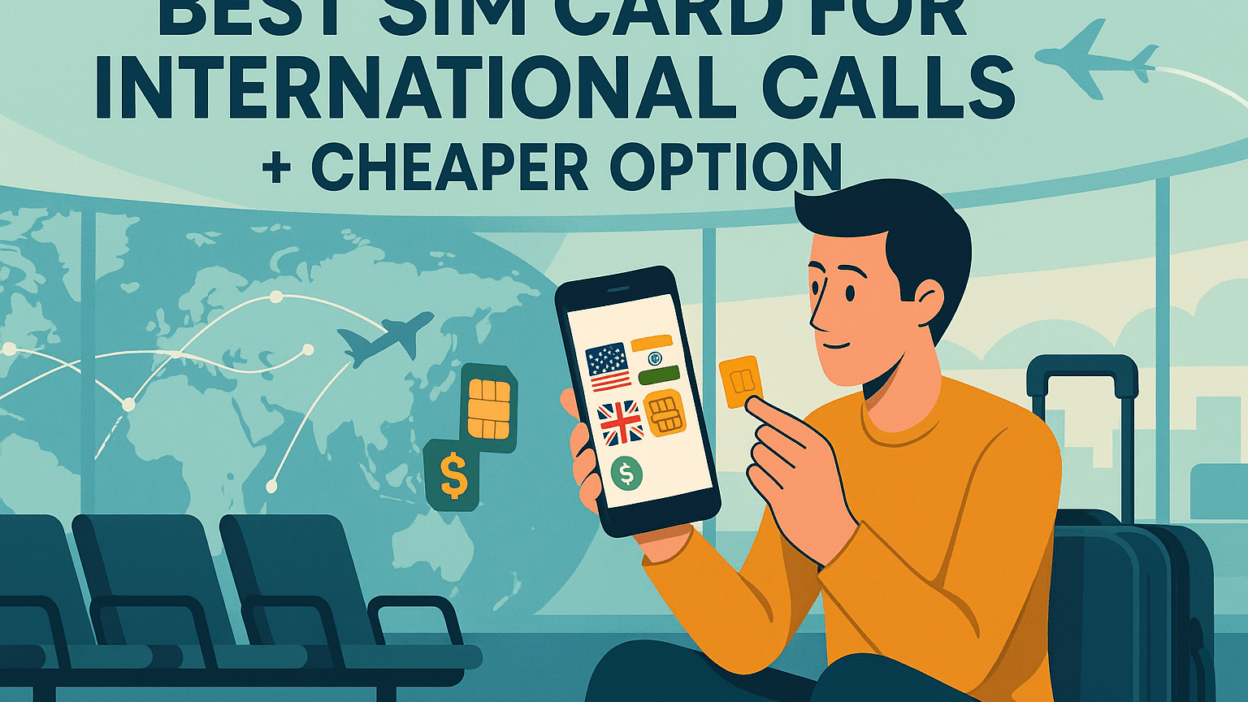
When looking for the best way to stay connected while traveling abroad, most people consider buying a SIM card that offers cheap international calling. But with so many options—from local prepaid SIMs to global roaming cards—it’s easy to miss one of the smartest alternatives: using a calling app that works with your current SIM and saves you up to 90% on international calls.
Here’s what you really need to know.
What Is an International SIM Card?
An international SIM card is a physical chip you insert into your mobile phone, allowing you to access cellular networks abroad. Unlike your regular SIM, which is tied to your home country’s network, an international SIM provides global coverage—making it easier to make calls, send texts, and use mobile data across multiple countries.
Types of International SIMs:
-
Global roaming SIMs: These work in 100+ countries and are preloaded with international rates.
-
Local prepaid SIMs: Best when you’re staying in one country for a longer period (e.g., buying an Italian SIM in Rome).
-
eSIMs: Digital versions that can be installed without a physical chip—ideal for newer smartphones.
-
Regional SIMs: Cover areas like the EU, South Asia, or Latin America.
Who Typically Uses Them?
-
Backpackers on multi-country trips.
-
Business travelers hopping between global offices.
-
Expats and students need long-term affordable options.
But are they really the best solution?
Top SIM Card Options for International Calls (With Pros & Cons)
Here’s a look at popular SIM card options that travelers often consider for international calling. Each has its pros and cons based on cost, ease of use, and reliability.
1. OneSimCard
Coverage: 200+ countries
Pros: Simple setup, dual SIM functionality, decent rates.
Cons: Requires SIM swap; varying rates per country.
Best For: Frequent travelers covering multiple countries.
2. WorldSIM
Coverage: 190+ countries
Pros: Global data plans and easy online management.
Cons: High rates in certain regions; complex UI.
Best For: Business travelers needing both data and calls.
3. Orange Holiday Europe
Coverage: EU countries
Pros: Excellent EU roaming rates, 20GB+ data bundles.
Cons: It doesn’t work well outside Europe.
Best For: Tourists staying within Europe.
4. Google Fi
Coverage: 200+ countries
Pros: Transparent pricing; works seamlessly on Pixel phones.
Cons: Requires Google account and monthly billing; not truly prepaid.
Best For: U.S.-based users with compatible devices.
5. Local Prepaid SIMs
Coverage: Country-specific
Pros: Cheapest for local calls/data.
Cons: Language barriers; may require ID for purchase; tricky for short stays.
Best For: Long-term travelers or expats in one country.
Why You Should Be Careful:
While international SIM cards seem convenient, many users experience:
-
Unexpected fees after their credit runs out.
-
Calls failing in remote regions due to weak partner networks.
-
Customer support is slow to respond when you’re abroad.
Key Issue: All these still require you to replace your current SIM, possibly lose access to your home number, and deal with roaming risks or complex plans.
Hidden Costs of SIM-Based International Calling
International SIM cards are marketed as cost-savers, but here’s what they don’t advertise clearly:
-
Roaming Traps: Even international SIMs roam outside their “home” network zones. For example, a Europe SIM might charge full roaming rates if you step into Turkey or Morocco.
-
Data-Only Limits: Some SIMs offer cheap data but expensive call rates, pushing you to use apps like WhatsApp—not ideal if the person you’re calling doesn’t have internet.
-
Expiry & Recharge Policies: Watch out for cards that expire after 30 days or need frequent top-ups to stay active.
-
Limited Support: If your SIM fails in a crisis (lost luggage, emergency call), email-only support won’t cut it.
Real Scenario:
A student traveling across Europe bought a roaming SIM, thinking it would cover all his calls. But once he crossed into Switzerland (non-EU), his calls were charged $2/min—10x more than expected.
A Smarter Alternative: Call Internationally Without Changing SIMs
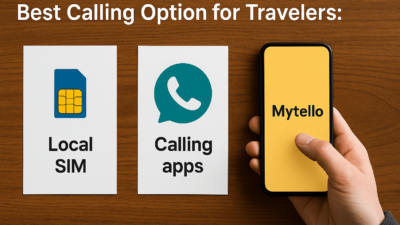
If your only goal is to call international numbers at a low cost, why not use your existing SIM + a call app like mytello?
With mytello:
-
Works with any SIM and any phone.
-
No need to swap SIMs or change your number.
-
Uses local dial-in numbers to connect you—no internet is required.
-
Transparent pricing: rates start at 1¢/min, and your credit never expires.
Why It’s Easier:
-
No setup delays: Sign up in minutes and make a trial call free.
-
Global reach: 200+ countries covered—call mobiles & landlines alike.
-
Full control: See your calling credit and call history in real-time through the app.
Example: Instead of buying a $30 international SIM for a week in Germany, you can register on Mytello, top up your balance, and start making calls immediately—with no need to switch SIMs or worry about coverage.
👉 Start your free trial call here → Register now
Extra Tips: How to Save Money on International Calls
-
Check your phone’s lock status: Unlocked phones give you more flexibility with SIM cards.
-
Monitor call setup fees: Some SIMs charge per call in addition to per-minute rates.
-
Combine local SIM + Mytello: If you’re abroad for data needs, use a local SIM for internet and mytello for international calls.
-
Avoid premium-rate numbers: These can incur hefty fees, even on international SIMs.
-
Read the fine print: Always review your SIM card’s terms for expiry dates and hidden costs.
Pros and Cons: International SIM vs. Mytello
| Feature | International SIM | Mytello |
|---|---|---|
| SIM Swap Required | Yes | No |
| Works on Landline | No | Yes |
| Needs Internet for Calls | No (but sometimes VoIP) | No |
| Cheap Rates for All Countries | Mixed | Yes (200+ countries) |
| Balance Expiry | Often | Never expires |
| Setup Time | Can be complex | Instant after signup |
Verdict: If your main priority is international calling, mytello offers a simpler, more cost-effective solution—without needing to deal with new SIMs, roaming, or tricky top-ups.
Final Thoughts
If you’re deciding between buying an international SIM or using a smarter alternative, always weigh your real needs. For many travelers and expats, the main goal is staying connected without the headache of changing numbers, dealing with SIM swaps, or paying sky-high roaming fees.
With Mytello, you get a simple, low-cost solution that lets you call any country at any time—no SIM swap, no contracts, and no hidden fees.
Start your free trial today → Sign up here
Frequently Asked Questions About SIM Cards and International Calling
What’s the difference between a global SIM and a local SIM?
A global SIM works across multiple countries with one number. A local SIM is designed for use in a specific country only, offering cheaper local rates but limited outside that area.
Can I keep my WhatsApp number if I change SIMs?
Yes, WhatsApp allows you to keep your number even after changing SIMs—but be cautious of SMS verification issues if you lose access to your original number.
Do I need a new SIM if I only want to make a few international calls?
Not necessarily. If you’re making just a few calls, using an app like mytello is far easier and cheaper—no SIM swap needed.
Is it cheaper to use Wi-Fi calling?
Wi-Fi calling is cheap if you have strong, reliable internet. However, mytello allows you to make calls without Wi-Fi, offering more flexibility in low-coverage areas.
Which is best for students or short-term travelers?
Students and short-term travelers benefit from app-based calling like mytello, because it avoids the hassle of SIM swaps and works right away with existing phones and numbers.